























Key Takeaways
-
Establish infrastructure early: Founders must build their core data room before taking the first meeting to signal operational readiness to institutional investors.
-
Predictable pricing models: Startups should avoid legacy platforms that charge unpredictable per page fees and instead choose flat monthly SaaS subscriptions.
-
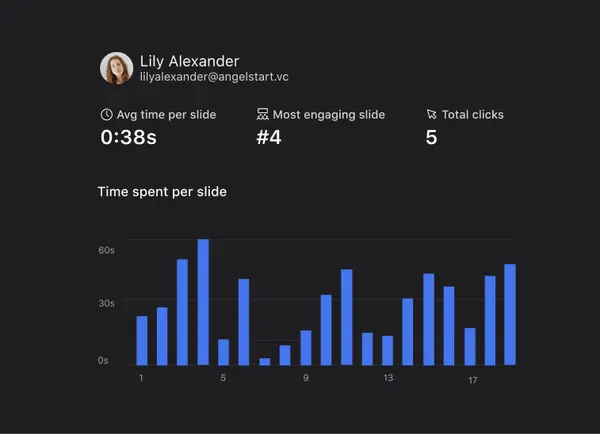
Mandatory engagement tracking: Tracking which partners open specific financial models allows founders to prioritize follow up communication and gauge actual interest.
-
Prioritize investor experience: Forcing venture capitalists to create new accounts or navigate clunky legacy portals creates unnecessary friction during Series A and Series B rounds.
-
Unified investor hubs: The best modern virtual data room providers combine secure document vaults with ongoing investor updates to centralize stakeholder management.
Best Data Room Providers: How to Choose the Right VDR for Your Startup
Raising a round requires momentum, and nothing stalls a deal faster than a disorganized due diligence process. When investors ask for your financials, cap table, and legal structures, you need a secure, organized way to share them instantly.
Choosing the best data room provider is about more than just finding secure cloud storage. For time-constrained founders, evaluating top providers means finding a platform that streamlines the entire investor workflow, from controlling access permissions to tracking exactly who is opening your files.
The problem? Many traditional virtual data rooms (VDRs) are built for massive corporate mergers, leaving startups wrestling with clunky interfaces and overly complex features. Today, evaluating the best options requires a modern approach: finding a centralized hub that moves beyond static file sharing to combine document management, investor updates, and engagement tracking in one place.
Here is exactly what to look for when evaluating your options, the features that actually make a provider the "best" for your fundraise, and how to choose the right setup to close your round with confidence.
Best Data Room Providers (Quick Picks by Use Case)
What are the best data rooms? The best data room provider depends entirely on your company’s stage, budget, and specific use case. While enterprise corporations need heavy-duty legacy software for mergers and acquisitions (M&A), startup founders raising capital need fast, streamlined platforms with built-in engagement tracking to monitor investor interest.
Because no single tool is perfect for every scenario, here is how to identify the best types of data room providers based on what you are actually trying to accomplish:
- Best for Active Fundraising: Modern Founder Hubs
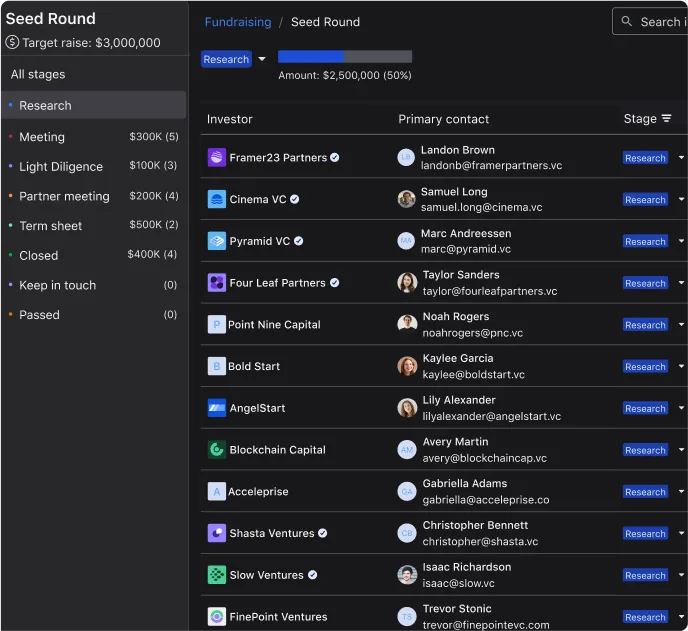
- The best platforms for active rounds are built specifically for founders managing fundraising, not just document storage. Instead of static file sharing, these solutions combine your data room with investor updates, CRM tools, and engagement analytics. This allows you to see exactly which investors are viewing your pitch deck and when, helping you focus on the warmest leads.
- Best Overall for Startups: Streamlined VDRs
- The top choices for early-stage startups prioritize ease of use, fast setup, and predictable pricing. The best providers in this category intentionally strip away the bloated features of legacy corporate systems so you can set secure permissions and start sharing links with investors in minutes.
- Best for Enterprise M&A: Legacy Deal Rooms
- When executing highly complex, late-stage acquisitions, the best providers offer enterprise-grade legal compliance, bulk file redaction, and intricate Q&A workflows. These platforms are incredibly robust but are typically too slow and expensive for standard startup fundraising.
- Best for High-Volume Due Diligence: Audit-Focused Platforms
- For later-stage startups (Series C and beyond) undergoing rigorous institutional audits, the best solutions focus heavily on strict version control and deep user activity logs to satisfy demanding legal teams.
- Best for Internal Organization: General Cloud Storage
- If you simply need a place for your team to collaborate internally, basic cloud drives are sufficient. However, these tools generally lack the viewing analytics and granular download restrictions the best data room providers offer for external sharing.
What Is a Virtual Data Room and What Is It Used For?
A virtual data room (VDR) is a highly secure, digital repository used to store and distribute confidential business documents. For startups, the best VDR providers turn this repository into an active deal-closing tool, organizing pitch materials and financials while strictly controlling viewer access and tracking engagement.
How is a data room different from Google Drive or Dropbox? While general cloud storage tools are excellent for internal team collaboration, they are not built for external fundraising. The best data room providers differentiate themselves by offering granular access controls (such as disabling downloads), secure watermarking, and critical viewing analytics. When you send a standard cloud link, it goes into a black hole; with a top-tier VDR, you know exactly who opened your documents and how much time they spent reviewing them.
For modern founders, evaluating the best data room means ensuring it supports three core workflows:
- Active Fundraising: It acts as the secure distribution center for your most critical materials. A founder raising a seed round shares financials and a pitch deck with multiple venture firms, using the provider's engagement analytics to see which partners are actually reviewing the data.
- Due Diligence: Once a term sheet is signed, investors require deep access to your company’s history. The best providers offer a secure vault to audit contracts and cap tables without risking sensitive data leaks.
- Ongoing Investor Communication: A top-tier data room shouldn't just be for raising capital. Instead of sending documents via messy email chains, many founders use platforms that combine a data room with investor tracking and updates, maintaining a single hub for current stakeholders.
Why Founders Need a Data Room (and When to Set One Up)
Founders often begin their fundraising journey relying on fragmented cloud folders. While this might work internally, it quickly breaks down when managing external capital.
Elizabeth Yin of Hustle Fund estimated that over 90% of the time a company the firm makes an offer to has not yet prepared a data room, and that the firm cannot send the money until they do, in Visible's webinar on how to build a data room.
Without a dedicated system, founders inevitably run into three major roadblocks: disorganized documents, repeatedly answering the exact same investor requests, and a total lack of visibility into investor engagement.
Choosing one of the best data room providers solves these pain points by establishing a single, secure source of truth. Timing is critical. Founders typically need a top-tier provider during three distinct stages:
- Before Fundraising: You should structure your core data room before taking your first investor meeting. Having a polished, secure link ready to share immediately demonstrates competence and keeps early deal momentum strong.
- Axel Bichara of Baukunst described where an investor's time actually starts going, in TechCrunch. "The decision to take a second meeting is one of the biggest decisions in venture capital because, from that [moment] onward, you are committing significant time." Being ready is what makes the second meeting easy to say yes to.
- During Due Diligence: When an investor commits to a deep dive, they require immediate access to sensitive materials. The best providers offer a secure environment to share these files while strictly controlling who can view or download them.
- For Ongoing Investor Updates: A great data room transitions into a permanent archive for sharing board decks and quarterly financials with your existing backers.
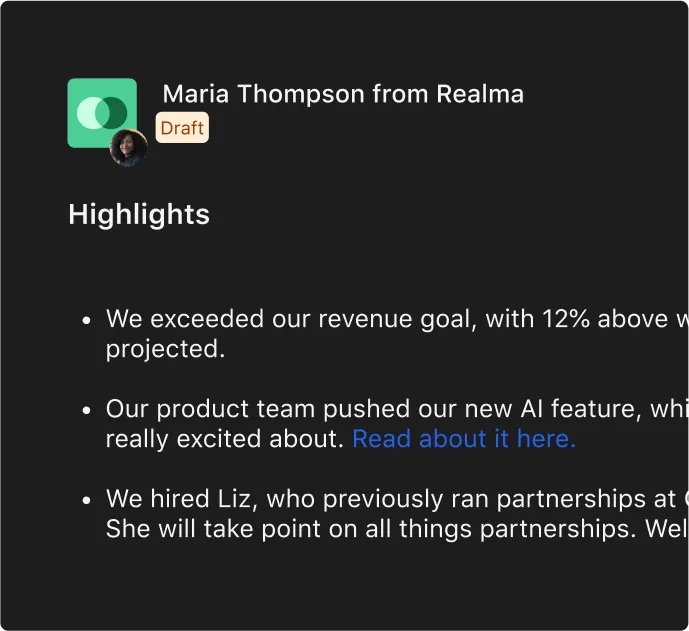
Instead of sending documents back and forth, many founders use platforms that combine a data room with investor tracking. Moving to a centralized investor hub allows you to securely manage all your files while unlocking real-time analytics—so you know exactly when an investor opens your pitch deck.
Best Data Room Providers for Startups
Finding the best data room for startups means looking past the complex systems designed for corporate lawyers and focusing on speed, security, and founder-investor alignment. The top providers remove friction from the due diligence process, ensuring your materials are easily accessible to the right people.
What Startups Should Look for in a Data Room
What features should a startup data room have?
A startup data room should feature an investor-friendly interface, fast setup capabilities, and transparent pricing. Crucially, founders must prioritize robust analytics to track exactly who views which documents, allowing them to gauge active investor interest.
When evaluating the best data room providers for startups, prioritize these core elements:
- Ease of use: You should not need a technical team to organize files or set access permissions.
- Fast setup: Time kills deals. The best tools let you generate secure links in minutes.
- Affordable pricing: Look for straightforward SaaS subscription models rather than unpredictable per-page fees.
- Investor-friendly UX: The platform must be intuitive for venture capitalists to navigate without forcing them through clunky account creation portals.
- Analytics (who viewed what): Document tracking is non-negotiable. The best providers tell you if an investor spent ten minutes analyzing your financial model versus glancing at your title slide.
Top Picks for Startups (Shortlist + Why)
Because every fundraise is different, the ideal virtual data room typically aligns with one of these distinct profiles:
- Best Budget Option: Standard cloud drives. These are cost-effective for internal file organization but lack the professional presentation and viewing analytics top providers offer.
- Best for Early-Stage: Streamlined secure document vaults. These offer a simple environment where pre-seed founders can safely share initial pitch decks without paying for enterprise features.
- Best for Fundraising Workflows: Unified founder hubs. The best options here move beyond static files to support the entire lifecycle of an investor relationship.
Unlike traditional VDRs built for M&A, some platforms are designed specifically for founders raising capital. For example, many founders choose Visible.vc because it is built from the ground up for the venture ecosystem. Instead of treating file storage as an isolated task, it combines your data room, investor updates, and engagement tracking into one streamlined experience.
Best Virtual Data Room Providers by Use Case
When searching for the best virtual data room, the answer is rarely one-size-fits-all. Top VDR providers cater to vastly different workflows. Understanding your immediate goal is the fastest way to evaluate your options.
Best for Fundraising
Active fundraising requires high velocity. Founders need a system that actively supports external investor sharing. A major pain point during a raise is answering repeated investor questions combined with a lack of visibility. The best data room providers for this use case solve these issues by integrating investor engagement tracking and centralized updates, helping founders close rounds faster.
Best for M&A and Due Diligence
Mergers and acquisitions require entirely different infrastructure. The top providers for this use case focus heavily on bulk document management, strict permissions, and detailed audit logs to provide a legal paper trail of exactly who accessed a specific contract.
Best Secure Data Room Providers
Which data room is the most secure?
The most secure data room providers offer robust encryption at rest and in transit, dynamic watermarking, and granular permission settings. These controls allow administrators to easily restrict viewing, downloading, or printing on a per-user basis.
When evaluating a secure data room, look for providers that allow you to seamlessly adjust access as a deal progresses, ensuring an early-stage prospect only sees a teaser deck, while a lead investor can safely review sensitive IP.
Comparison of Top Data Room Providers
When evaluating the best data room providers in USA markets and globally, founders must compare solutions based on how they actually intend to use them.
Side-by-Side Comparison Table
Here is a breakdown of how different types of top data room providers stack up:
| Provider Type | Pricing Model | Ease of Use | Best For | Security | Analytics | Setup Time |
|---|---|---|---|---|---|---|
| Modern Founder Hubs | Predictable SaaS Subscription | High (Built for founders) | Fundraising & Investor Updates | High (Granular permissions) | Deep (Page-by-page tracking) | Minutes |
| Legacy VDRs | Per-Page / Custom Enterprise | Low (Requires training) | M&A & Institutional Audits | Ultra-High (Legal compliance) | Moderate (Audit logs) | Days |
| Standard Cloud Storage | Per-User / Storage Limits | High (Everyday use) | Internal Team Collaboration | Basic (Link sharing) | None (Blind sharing) | Immediate |
Key Differences That Actually Matter
When evaluating the best options, the decision ultimately comes down to three operational differences: UX, pricing transparency, and the underlying purpose of the software.
Legacy VDR vs Modern Founder Tools
- UX Differences: Legacy providers design tools for compliance officers. They are notoriously clunky. The best modern platforms prioritize a consumer-grade user experience, enabling investors to access documents without jumping through hoops.
- Pricing Transparency: Traditional providers frequently use outdated pricing models, charging by the page. The best modern solutions offer flat-rate, predictable SaaS subscriptions.
- The Goal of the Tool: Legacy platforms protect data during an adversarial audit. The best modern founder tools facilitate a relationship, making it easy to track engagement and close the round.
What Should Be in a Startup Data Room?
What should be in a startup data room?
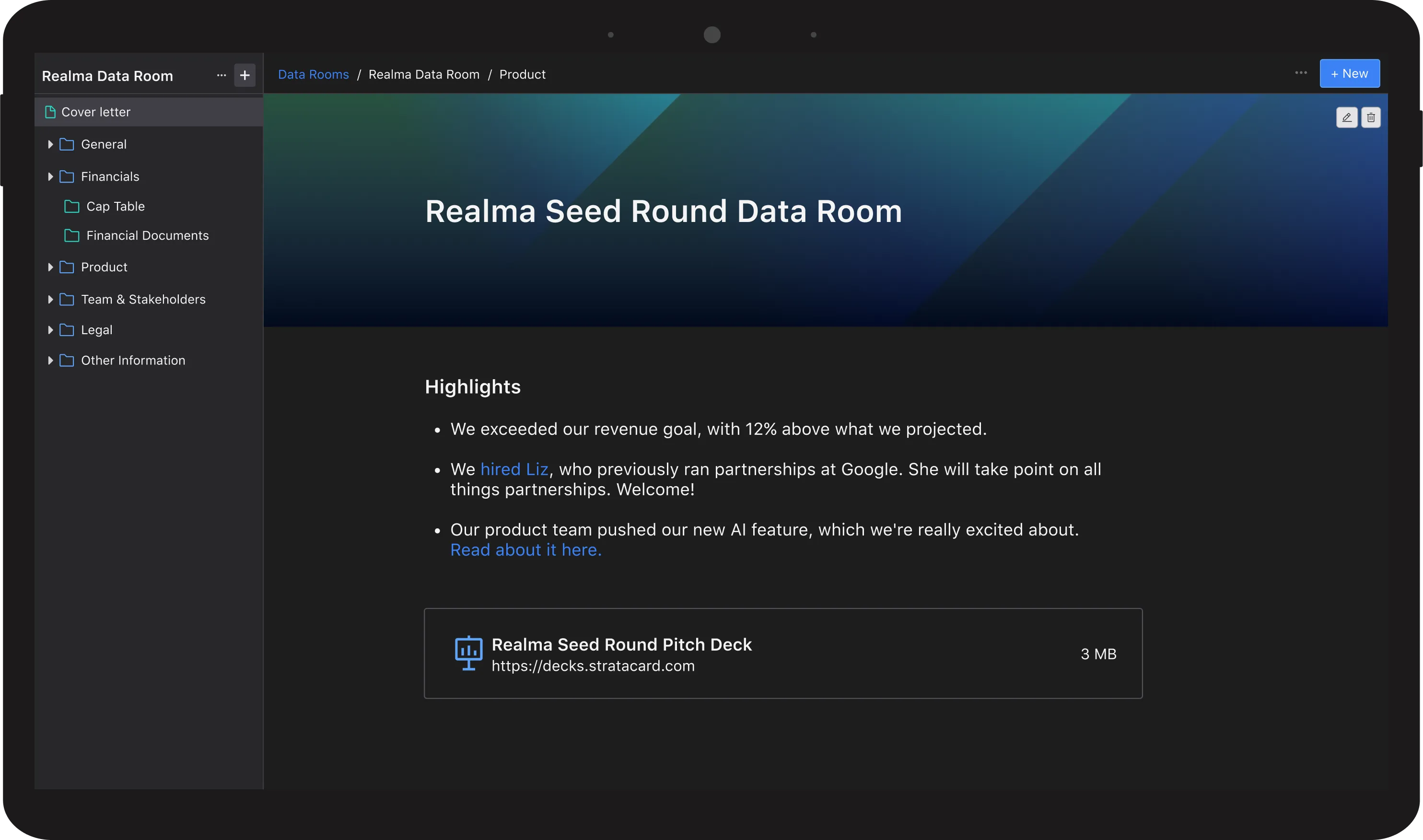
A startup data room should contain essential fundraising documents organized logically. This includes your current pitch deck, historical and projected financials, a detailed cap table, legal formation documents, product materials, and performance KPIs that demonstrate traction.
Essential Documents Checklist
The best data room providers make it easy to host a standardized set of materials:
- Pitch Deck: Your primary narrative, vision, and market opportunity.
- Financials: P&L statements, balance sheets, and a robust financial model.
- Cap Table: A clear breakdown of current company ownership and option pools.
- Legal Docs: Core company formation paperwork and IP assignments.
- Product Materials: Product roadmaps and recorded demos.
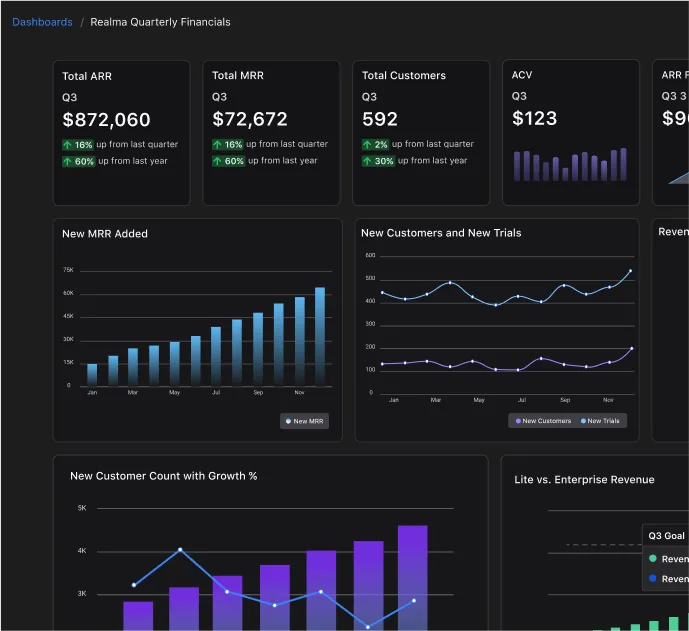
- KPIs: A centralized view of metrics like MRR and CAC.
How to Organize Your Data Room for Investors
Just throwing all of your documents into a single folder creates a frustrating experience. The best providers offer features that help you present your data cleanly.
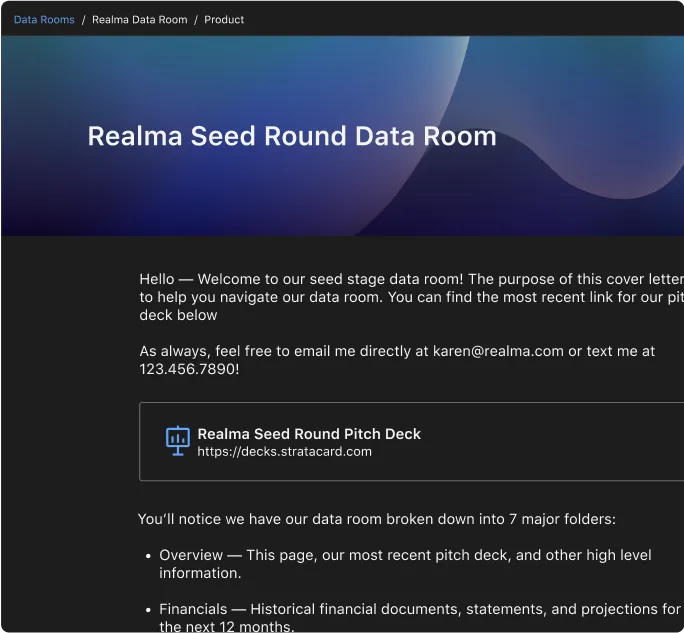
Maintain strict naming conventions and always include dates in file names. Because presentation matters, many founders prefer using top-tier providers that feature structured dashboards and organized sharing systems. By elevating your materials from a basic folder tree into a clean interface, you create a frictionless experience.
How to Choose the Right Data Room Provider
Choosing the right platform is critical because migrating documents mid-fundraise can severely disrupt deal momentum.
Decision Framework for Founders
Use this framework to evaluate the best providers based on your current reality:
- If you are raising your first round (Pre-Seed/Seed): Prioritize speed and affordability. You need a platform where you can upload a deck, generate a secure link, and track views within minutes.
- If you are a scaling startup (Series A/B): Prioritize robust access controls, analytics, and ongoing investor management. Choose a solution that allows you to easily transition from a fundraising data room to a permanent hub for quarterly updates.
- If you are preparing for a major exit or acquisition: Prioritize compliance and enterprise-grade legal workflows. You will need a heavy-duty, legacy VDR provider.
Common Mistakes to Avoid
When evaluating providers, founders frequently make missteps:
- Overpaying for enterprise tools: Startups do not need the same software used for massive corporate mergers.
- Ignoring the investor UX: If an investor has to download proprietary viewing software to view your financial model, you are introducing friction. The best providers feel professional and effortless.
- Choosing tools without analytics: Relying on basic cloud storage is a massive missed opportunity. The best data room providers offer document tracking analytics so you can prioritize which investors to follow up with.
Final Recommendation: Choosing the Best Data Room for Your Startup
Ultimately, the "best" data room provider is the one that removes friction from your specific workflow.
Best Choice by Scenario
- First-time founder raising capital: Look for a streamlined platform focused on fast setup, intuitive UX, and core document tracking.
- Scaling startup: You need a dynamic tool that handles both rigorous Series A/B due diligence and ongoing stakeholder updates.
- Enterprise deal: Stick to legacy, audit-focused VDRs built for legal compliance and bulk file redaction.
The Modern Approach to Data Rooms
The industry is seeing a major shift from static storage to dynamic investor collaboration. Today’s top platforms recognize that a data room is not just a filing cabinet; it is a communication tool.
For founders who want to manage fundraising and investor communication in one place, a unified approach is often the smartest choice. A platform that combines data rooms, investor updates, and reporting ensures that every document you share works actively toward closing your round.
Frequently Asked Questions
What makes the best data room provider for startups?
The best data room providers for startups prioritize fast setup, predictable pricing, and robust document tracking over complex corporate legal features. Founders need streamlined tools that keep deal momentum moving without requiring a steep learning curve.
- Focus on platforms offering flat-rate SaaS pricing to avoid hidden per-page fees.
- Ensure the tool includes page-by-page viewing analytics to measure active investor interest.
- Choose interfaces that allow investors to access files without creating frustrating new accounts.
How much do the top virtual data room providers cost?
Virtual data room pricing varies heavily by provider type, ranging from flat-rate monthly SaaS subscriptions for startup tools to expensive per-page billing models for legacy M&A platforms. Early-stage founders should expect to pay a predictable monthly fee.
- Startup-focused hubs typically charge $50 to $200 per month based on feature tiers.
- Legacy enterprise deal rooms often charge by data volume, easily exceeding thousands per deal.
- Always avoid unpredictable per-user or per-gigabyte fees when sharing large financial models.
When should a founder set up a fundraising data room?
Founders should establish their core virtual data room before scheduling their first investor meeting. Having a secure link ready to share immediately after pitching demonstrates operational competence and prevents deal fatigue during the due diligence phase.
- Upload your core pitch deck and historical financials before investor outreach begins.
- Prepare detailed cap tables and legal formation documents prior to signing a term sheet.
- Use the setup process to identify and fix any missing operational records internally.
Which documents must be included in a secure data room?
A secure data room must contain all materials required to pass investor due diligence, categorized logically to remove friction. The core files should validate your company's narrative, financial health, and legal standing.
- Include your primary pitch deck alongside a detailed 3-to-5-year financial model.
- Provide a clean cap table detailing all founder equity, option pools, and existing SAFEs.
- Organize key legal documents like articles of incorporation and intellectual property assignments.
Why is document tracking important in a VDR?
Document tracking analytics allow founders to see exactly which investors are opening files, what specific pages they review, and how long they spend on them. This data acts as a critical signal to gauge genuine investor interest.
- Prioritize follow-ups with partners who actively spend time deep in your financial models.
- Identify potential red flags if investors stall on a specific legal or product document.
- Stop wasting time chasing early conversations who never actually open your data room.