
Key Takeaways
-
Differentiation pressure: Venture funds win allocations in competitive rounds on the support a firm delivers, which makes a working portfolio data collection process part of the pitch to founders.
-
Relationship horizon: A venture investor and founder work together for the better part of a decade, so founders screen funds on partnership quality rather than on the size of the check.
-
Program decisions: A portfolio data collection program has to settle when requests go out, how many metrics each one asks for, and which qualitative questions accompany the numbers.
-
Pattern recognition: A fund that sees the same challenges across many companies can route the right introduction or playbook to a founder, provided the data request stays small enough to answer.
As more capital flows into venture as an asset class, investors are increasingly competing for LP dollars and space on the cap table from the best founders they work with.
Gone are the days when capital is enough of a differentiator for a VC fund to get on a hot startup’s cap table. Considering the average VC + Founder relationship is 8-10 years (longer than the average marriage in the US) — founders are beginning to look for a true partner out of a VC fund.
In order for a VC fund or emerging fund manager to stand out among other funds, they need to have the data and systems in place.
LPs have increasingly higher expectations for fund performance while founders have increasingly higher expectations for VC funds.
About this Report
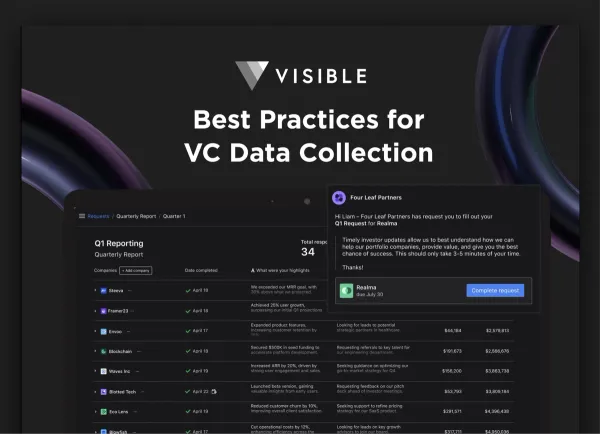
The goal of this report is to break down the best practices we see hundreds of VC use to collect and share their portfolio data. We outline best practices related to:
- Market Data Overview
- Timing of Data Requests
- Number of Metrics to Collect
- Most Common Metrics
- The Founder Experience
- Qualitative Questions
- Minimum Viable Data Request
Company Success = Fund Success
Venture capital funds are only as successful as their portfolio companies. There are few people who have been in a founder’s shoes and can help them navigate the challenges they are facing. However, investors are in a unique position as they’ve likely seen many portfolio companies and potential investments face the same challenges.
Elena Pantazi, talent and portfolio support partner at Northzone, gave that vantage point a concrete shape in Crunchbase News. "investors who have seen companies manage those scenarios can suggest best practices for scaling a team and implementing the right organizational structures." Recognising the pattern depends on having collected the same information from every company in the first place.
In order to best help portfolio companies, investors need to have a strategy in place to collect both qualitative and quantitative data from their portfolio companies.
Across the 400+ funds using Visible, most investors asked their companies for 8 metrics and 1-2 qualitative questions on a quarterly basis, according to Visible's portfolio monitoring post.
Collecting a few KPIs and company asks is a great place to start (more on this later in the report). At the same time, there is a balance between helping and being a burden on a portfolio company.
Download our report to learn some simple best practices so you can collect the data you need without burdening your portfolio companies
Frequently Asked Questions
Why is capital alone no longer enough to win a place on a startup's cap table?
Capital keeps flowing into venture as an asset class, which puts more funds in competition for the same allocations. Founders want a true partner out of a fund, and the funds that stand apart are the ones with data and systems already in place.
What can an investor offer a founder beyond capital?
An investor brings pattern recognition drawn from many companies facing the same challenges. Few people have stood in a founder's shoes and can guide a founder through the challenge at hand, which is what makes an investor's vantage point unusual.
What data should a fund collect from portfolio companies?
A fund needs a strategy covering both quantitative and qualitative data. A few KPIs alongside company asks is the place to start, and keeping the request small is what holds the balance between helping a portfolio company and burdening one.