











Key Takeaways
-
Scale beyond spreadsheets: Transitioning to purpose-built venture capital portfolio management software is critical for managing illiquid assets, custom cap tables, and complex private market data.
-
Automate founder updates: The right platform streamlines KPI collection directly from founders, eliminating unstructured email threads and drastically reducing update fatigue.
-
Track fund performance instantly: Automatically calculate and visualize critical metrics like IRR, MOIC, DPI, and TVPI without risking manual formula errors.
-
Streamline LP communications: Transform raw portfolio data into professional, standardized dashboards and tear sheets, cutting investor reporting cycles from weeks to hours.
-
Establish a single source of truth: Centralizing your firm's data empowers your investment team to spend less time on manual entry and more time driving strategic portfolio growth.
What Are Investment Portfolio Management Tools?
Investment portfolio management tools are specialized software platforms used by investors to track asset performance, centralize financial data, and monitor fund health. For venture capital firms, these tools replace manual spreadsheets by automating portfolio company analytics, standardizing KPI tracking, and streamlining reporting for limited partners (LPs).
Beyond basic record-keeping, modern portfolio management software acts as a single source of truth for your fund. It bridges the gap between raw data collection and actionable investment insights.
These platforms empower fund managers to:
- Automatically aggregate financial metrics and qualitative updates directly from founders.
- Calculate critical fund performance metrics (like IRR, MOIC, TVPI) without manual spreadsheet updates.
- Standardize and automate reporting workflows for stakeholders and LPs.
- Centralize documents, cap tables, and historical performance data in one secure environment.
Retail Portfolio Tools vs. Venture Capital Tools
Not all investment software is created equal. Understanding the distinction between retail and institutional tools is critical for fund managers.
Retail Portfolio Tools: Generic portfolio trackers are built for public equities and individual investors. They focus on real-time stock prices, daily market volatility, and direct integrations with retail brokerages. They are not built for complex fund structures.
VC and Private Market Tools: Venture capital portfolio management software is engineered exclusively for private markets. It handles illiquid assets, staggered funding rounds, custom cap tables, and bespoke founder reporting. These tools are designed to manage the unique data collection and LP communication workflows that public market tools simply cannot process.
Why Venture Capital Firms Need Portfolio Management Tools
Managing a handful of investments in a spreadsheet is possible, but scaling a fund requires purpose-built infrastructure. As a portfolio grows, the operational burden of collecting data, analyzing metrics, and communicating with stakeholders grows exponentially.
Here is why established funds and emerging managers rely on dedicated portfolio management platforms:
- Managing Multiple Portfolio Companies at Scale: A VC tracking 25+ companies across stages, from Seed to Series C, cannot rely on ad-hoc email updates. Software standardizes data collection, giving investors a unified dashboard to monitor revenue growth, cash runway, and headcount across the entire portfolio at a glance.
- Tracking Private vs. Public Investments: Unlike public equities, which have real-time pricing and standardized SEC filings, private market data is highly fragmented. Venture capital tools are specifically built to handle the illiquid nature of startups, accommodating custom metrics, varying reporting cadences, and complex cap table structures.
- Handling LP Reporting Complexity: Preparing quarterly LP updates is often one of the most time-consuming tasks for fund managers. Instead of manually extracting data from dozens of founder emails to build a single PDF, modern software automates the process. Managers can instantly pull verified metrics into beautiful, standardized LP reports.
- Streamlining Founder and Stakeholder Communication: Founders are busy building, and constantly fielding disparate data requests creates friction. Portfolio management tools streamline this by providing structured, automated request workflows. This reduces the burden on founders while ensuring the fund gets accurate, timely data for internal decision-making.
How do VCs track portfolio company performance?
Venture capitalists track portfolio company performance by using specialized portfolio management software to collect structured financial and operational KPIs directly from founders. These platforms centralize private market data, allowing fund managers to monitor growth metrics, analyze fund health, and automatically calculate key returns like IRR and MOIC.
Key Features to Look For in Portfolio Management Software
When evaluating the top portfolio management software picks and key features to look for, venture capital firms must prioritize workflows over basic data storage. A robust platform should seamlessly connect founder updates, internal analytics, and external stakeholder reporting.
Here are the critical capabilities to prioritize when selecting a modern portfolio management solution.
Portfolio Tracking Across Private and Public Assets
Multi-asset visibility is notoriously difficult for venture funds. As companies mature from seed-stage startups to late-stage growth or even post-IPO, data fragmentation becomes a major operational hurdle.
Your software must handle the illiquidity and custom cap tables of private assets while maintaining a unified view of your entire fund. Consolidating this tracking into a single source of truth eliminates the need to reconcile data across disparate spreadsheets and accounting systems.
Performance Analytics (IRR, MOIC, DPI, TVPI)
What metrics should venture capitalists track in a portfolio? Venture capitalists must track Gross and Net Internal Rate of Return (IRR), Multiple on Invested Capital (MOIC), Distributions to Paid-In (DPI), and Total Value to Paid-In (TVPI). These critical metrics measure overall fund performance, realized cash returns, and the fair market value of active portfolio companies.
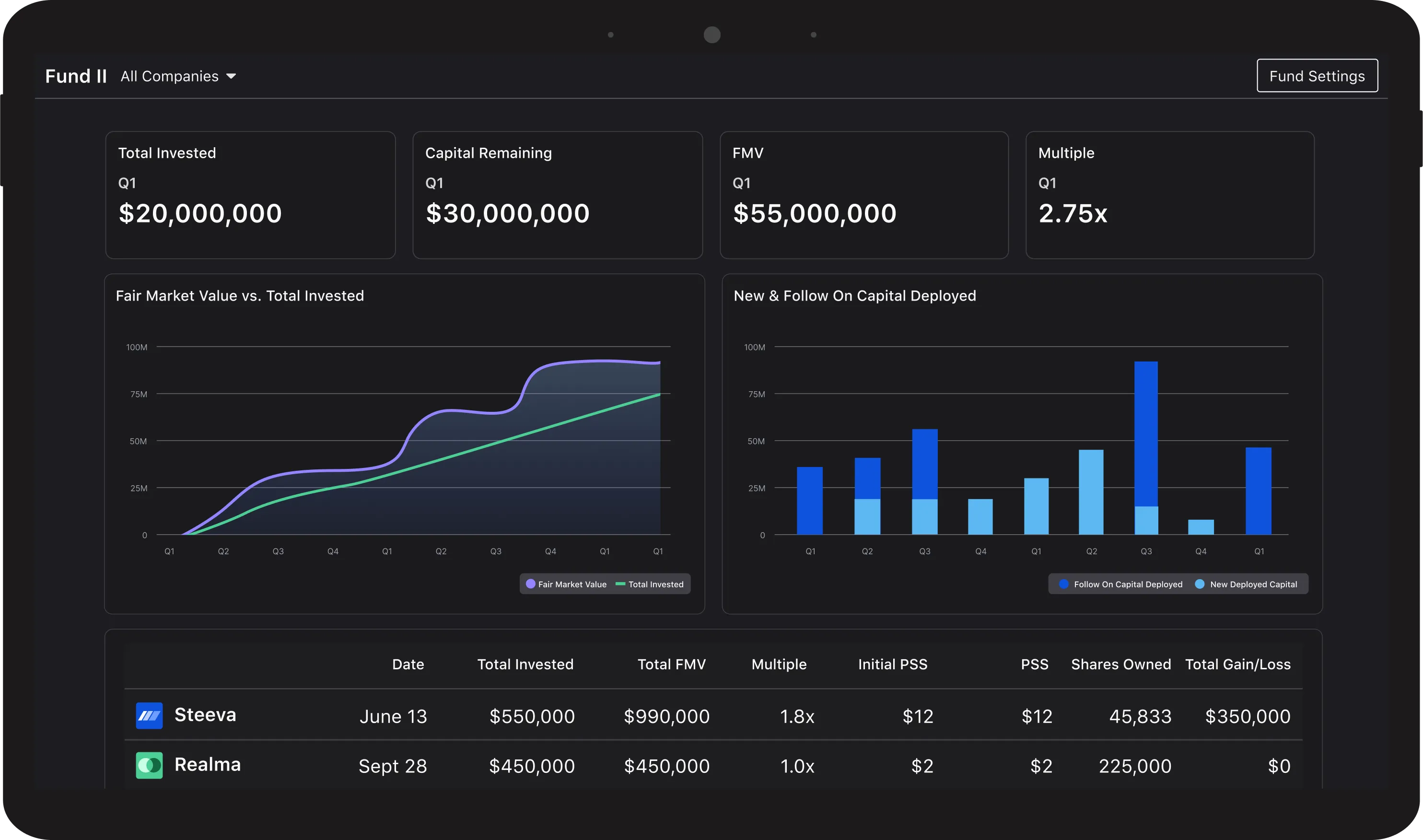
Leading platforms calculate these metrics automatically based on your investment data. For example, your software should allow you to instantly view the MOIC of a specific cohort to evaluate your thesis, or pull up DPI to demonstrate actual liquidity events during your next LP meeting.
Investor Reporting and LP Updates
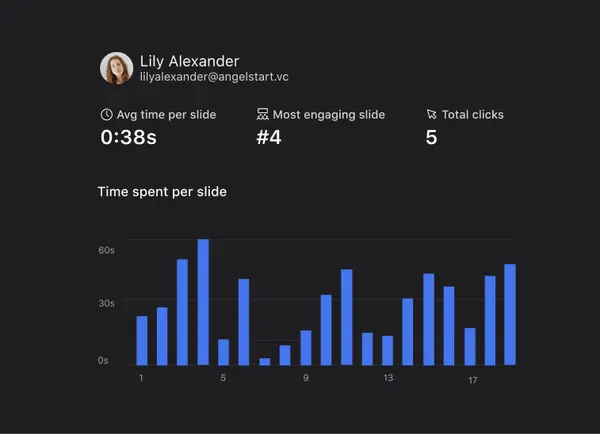
Managing limited partner expectations requires regular, high-quality communication. Instead of manually copying and pasting financial charts into a static slide deck, the right tool transforms raw portfolio data into polished LP updates.
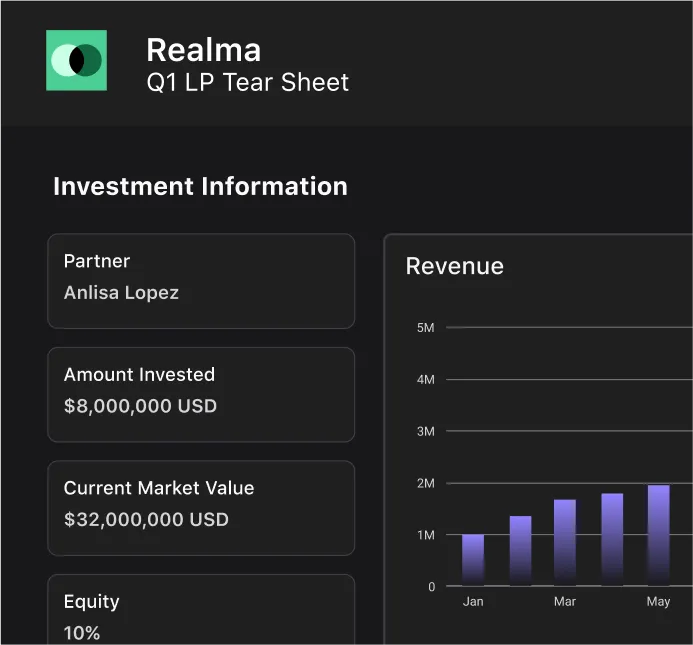
Look for platforms that offer dynamic dashboards, automated tear sheets, and customizable reporting templates. This ensures your LPs receive professional, accurate, and timely insights into fund health without draining your team's bandwidth.
Data Integrations and Automation
A portfolio management tool should not create another data silo. To truly scale your operations, the software must integrate seamlessly with your existing tech stack.
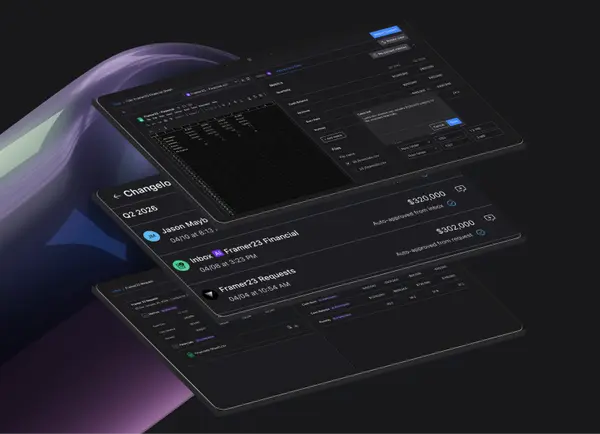
Prioritize platforms that connect with your CRM, cap table management tools, and accounting software. Automating the flow of data across these systems eliminates manual double-entry and ensures your investment team is always working with the most up-to-date numbers.
Collaboration and Stakeholder Communication
Portfolio management is a highly collaborative process involving internal team members, founders, and LPs. Efficient software centralizes these interactions.
Key features should include automated data request workflows that prompt founders for quarterly KPIs without manual follow-ups. Additionally, secure document sharing and internal team notes ensure that all stakeholders are aligned, informed, and operating from the same validated dataset.
Best Investment Portfolio Management Tools (By Category)
What is the most popular portfolio management software?
The most popular portfolio management software depends entirely on the investor's asset class. Venture capital firms require platforms built for private market data, custom KPIs, and LP reporting. Meanwhile, retail investors and financial advisors rely on tools designed for public equities, daily trading, and wealth management.
To find the best investment portfolio management tools for your specific needs, it is critical to categorize them by their primary user base.
Best Portfolio Management Tools for Venture Capital Firms
Venture capital firms require purpose-built infrastructure. Generic financial tools simply cannot handle the nuances of private markets, staggered funding rounds, or custom startup KPIs.
The best portfolio management software for VCs goes beyond basic equity tracking. It centralizes portfolio company data, automates metric collection directly from founders, and seamlessly transforms raw numbers into polished LP reports.
Firms that adopt specialized VC platforms gain deeper, more accurate portfolio insights. They also recover hundreds of hours previously lost to manual data entry, fragmented emails, and spreadsheet formatting.
Best Portfolio Management Software for Financial Advisors
For financial advisors managing client wealth, the best services prioritize public market integrations, portfolio rebalancing, and strict compliance tracking. These platforms are engineered to handle high-volume public trades, tax-loss harvesting, and secure client portal access for daily equity monitoring.
Best Portfolio Management Apps for Individual Investors
Individual investors managing personal wealth benefit most from consumer-grade apps. The best apps for retail investors focus on user-friendly mobile interfaces, real-time stock quotes, and simple dividend tracking across personal brokerage accounts, bypassing complex fund metrics entirely.
Best Portfolio Analysis Tools
When evaluating the top portfolio management tools (2026), robust analytical capabilities are a non-negotiable requirement. The top portfolio management tools by category all feature advanced analytics engines tailored to their specific users.
For venture capital and institutional investors, true portfolio analysis means the ability to instantly calculate fund-level performance. It allows managers to seamlessly track MOIC and IRR, benchmark against industry standards, and model future valuation scenarios based on structured, validated data.
Best Free Portfolio Management Tools (and Their Limitations)
While emerging managers might initially seek out investment portfolio management tools free of charge, the reality of venture capital quickly demands more robust infrastructure. Understanding the gap between basic trackers and institutional platforms is critical for scaling your fund's operations.
What Is the Best Free Portfolio Tracker?
The best free portfolio tracker for everyday investors is typically a basic spreadsheet or a consumer-grade app linked to a public brokerage. However, for venture capital firms, there is no truly effective free investment portfolio management tool, as private market tracking requires specialized, secure, and automated software.
Pros of Free Tools
For a solo angel investor writing their first few checks, the best free portfolio management software is usually a simple spreadsheet. These tools are highly accessible, infinitely customizable, and require zero upfront budget.
They offer a straightforward way to manually log initial investments, track basic company names, and keep unstructured notes on founder conversations without any onboarding friction.
Limitations for Venture Capital Firms
As a fund scales, relying on a basic spreadsheet or the best free portfolio analyzer quickly becomes an operational liability. When evaluating the top free investment portfolio management tools and key considerations, severe gaps for institutional investors immediately emerge:
- No Private Market Tracking: Free tools cannot handle custom cap tables, SAFEs, convertible notes, or complex, staggered funding rounds.
- Limited Reporting: Manually calculating fund-level metrics like IRR or MOIC in a free tool is highly prone to human error and broken formulas.
- No LP Communication Features: Free software lacks secure dashboards or automated tear sheets, forcing managers to rely on fragmented, unsecure email threads.
When to Upgrade to Paid Software
Knowing when to transition from free tools to a dedicated platform is a critical operational milestone. Firms should upgrade to paid portfolio management software when they hit these specific triggers:
- Portfolio Volume: Managing more than 10 to 15 active portfolio companies makes manual data collection and manual entry unsustainable.
- Reporting Complexity: Your limited partners begin demanding standardized, quarterly updates detailing DPI, TVPI, and comprehensive fund-level performance.
- Stakeholder Demands: Founders are experiencing "update fatigue" from your unstructured email requests, signaling the need for an automated data collection workflow.
Portfolio Management Software vs Fund Management Software
What is the difference between portfolio management software and fund management software?
Portfolio management software focuses on tracking the performance, metrics, and overall health of the individual companies a venture capital firm invests in. Fund management software handles the back-office operations of the venture firm itself, including accounting, capital calls, distributions, and tax compliance.
While these two categories are adjacent and often confused, they serve entirely different workflows within a venture capital firm.
Portfolio Tracking (The Front Office) Portfolio management software is built for the investment team. This is where partners and analysts evaluate asset growth, collect KPI data directly from founders, and visualize revenue trends. It calculates investment-level returns (like MOIC and IRR) and powers the qualitative insights needed for compelling LP updates.
Fund Operations (The Back Office) Fund management software is the domain of CFOs, accounting teams, and fund administrators. It is strictly financial software designed for general ledger accounting, managing the firm's management fees, tracking capital commitments, and issuing K-1 tax documents.
When Venture Capital Firms Need Both
As venture capital firms scale, they quickly realize that one tool cannot perfectly serve both the investment team and the accounting team. Attempting to force accounting software to track dynamic startup KPIs always leads to operational friction.
Similarly, expecting portfolio tracking tools to execute complex capital calls introduces unnecessary risk.
Mature firms bridge this gap by integrating these two systems. They rely on fund management software to run the firm's back-office operations, while utilizing dedicated portfolio management platforms to monitor and report on the actual performance of the companies they back.
How to Choose the Right Portfolio Management Tool
The best portfolio management for venture capital firms is a purpose-built software platform that centralizes private market data, automates founder KPI collection, and streamlines LP reporting. It eliminates manual spreadsheet tracking, allowing fund managers to efficiently calculate metrics like IRR and MOIC across illiquid investments.
Which portfolio management service is best?
The best portfolio management service for a VC firm depends on its specific portfolio complexity, but top-tier solutions always prioritize automated data integrations, seamless stakeholder communication, and scalable reporting infrastructure. It must act as a single source of truth for both qualitative and quantitative portfolio performance.
Selecting the right platform is a critical operational decision that impacts your entire firm, from the investment team to your limited partners. Use this five-step framework to evaluate potential software solutions.
Step 1: Define Your Portfolio Complexity
Assess the sheer volume of your active investments and the types of assets you hold. A fund with five early-stage startups has vastly different data needs than a multi-stage firm managing 50+ companies across various funding vehicles.
Ensure the tool can easily handle the nuances of private markets. This includes custom cap tables, convertible notes, SAFEs, and staggered follow-on rounds without breaking formulas or requiring manual workarounds.
Step 2: Identify Reporting Requirements
Consider the level of detail and frequency your LPs expect. Do they require high-level quarterly summaries, or do they demand granular, tear-sheet-style updates on specific cohort performance?
Look for software that automates the creation of professional, standardized reports. This drastically reduces the time your team spends formatting PDFs and preparing for annual general meetings (AGMs) or quarterly updates.
Step 3: Evaluate Integrations and Data Sources
Your portfolio data does not live in a vacuum. To be truly effective, your portfolio management system must connect with your CRM, accounting software, and cap table management tools.
Prioritize platforms with robust native integrations. This ensures a seamless flow of data across your firm, eliminating manual double-entry and maintaining a strictly validated single source of truth.
Step 4: Consider Team Size and Collaboration Needs
Evaluate how your internal team interacts with data. Partners, principals, and analysts all need varying levels of access, customizable dashboards, and collaborative note-taking capabilities.
Additionally, consider the founder experience. The right tool simplifies the data request process for founders through automated, structured workflows, removing friction and dramatically improving KPI response rates.
Step 5: Assess Scalability
Do not just buy software for your current fund size; invest in infrastructure that will seamlessly support your next two funds.
The platform must effortlessly handle an expanding portfolio, more complex LP structures, and increased data volume. Upgrading your tech stack should accelerate your growth, not create an operational bottleneck down the road.
How Venture Capital Firms Use Portfolio Management Tools (Real Workflows)
Can portfolio management tools handle private market investments?
Yes, specialized venture capital portfolio management tools are specifically designed to handle private market investments. Unlike retail software, these platforms track illiquid assets, custom cap tables, SAFEs, and convertible notes, providing an accurate, centralized view of private company valuations and overall fund performance.
Top-tier venture firms do not just use software as a static database; they build their core operational workflows around it. Here is how modern funds leverage these tools day-to-day.
Tracking Portfolio Company Performance
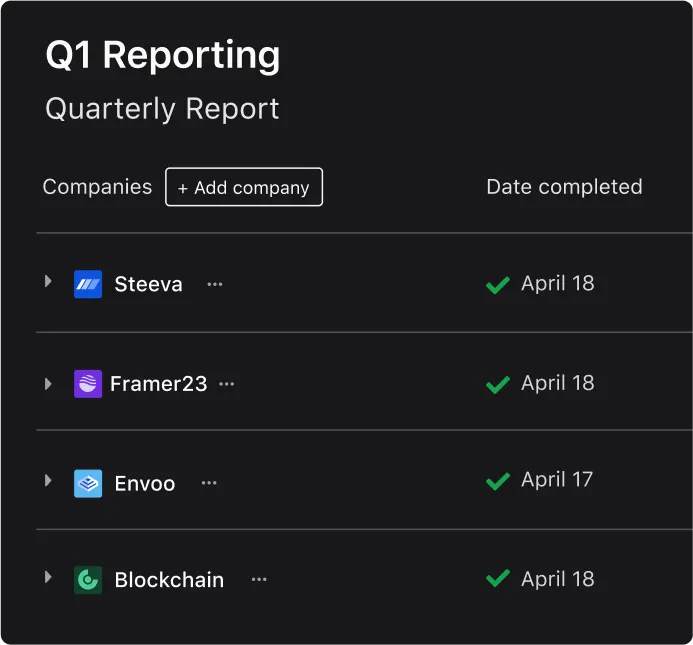
Instead of chasing founders via email, investment teams use software to establish automated, recurring data requests. A typical workflow involves scheduling a standardized digital template to go out at the end of each quarter, prompting founders to input their net new ARR, cash runway, and key hires.
The platform automatically ingests this raw data, updates the company's historical performance timeline, and immediately flags any metrics that deviate from expected growth targets. This transforms a chaotic, multi-week collection process into a frictionless operational rhythm.
Preparing LP Reports and Investor Updates
Compiling quarterly LP updates manually can take weeks of formatting spreadsheets and verifying fragmented data. Dedicated portfolio management platforms reduce this reporting cycle to a few hours by pulling validated numbers directly into professional, pre-built templates.
Firms can generate customized, branded tear sheets and comprehensive fund performance dashboards instantly. This level of automation gives investor relations teams the time to focus on crafting the fund's strategic narrative rather than wrestling with data entry.
Monitoring KPIs Across Portfolio Companies
A critical workflow for partners is identifying macro trends across their active investments. Modern software provides dynamic, visual dashboards that allow investors to benchmark portfolio companies against one another based on sector, stage, or specific fund cohort.
By visualizing aggregated KPIs, such as burn multiples, customer acquisition costs, or gross margins, investors can quickly spot outlier startups for follow-on capital or identify struggling founders who require immediate strategic support.
Centralizing Data Across Investments
Before adopting dedicated software, fund data is typically scattered across CRM notes, disjointed cloud folders, and individual partner inboxes. Portfolio management tools solve this fragmentation by acting as the firm's single, unified source of truth.
Every board deck, cap table update, and historical financial metric is centralized in one secure environment. This ensures that institutional knowledge remains intact, accessible, and actionable, even as the firm scales or team members turn over.
Why Venture Capital Firms Are Moving Beyond Spreadsheets
When should a VC firm upgrade from spreadsheets to software?
A venture capital firm should upgrade from spreadsheets to specialized software when managing more than 10 to 15 active portfolio companies. Software becomes necessary when manual data collection creates errors, LP reporting demands outgrow basic formatting, and tracking complex metrics like IRR or MOIC becomes unsustainable.
Spreadsheets are the default starting point for emerging managers, but they quickly become an operational liability. As a fund scales, relying on manual data entry across fragmented files introduces significant risk to the firm's data integrity.
Manual Updates and Data Collection Chasing founders for quarterly financials and manually typing that data into a master sheet is an enormous drain on an investment team's time. This friction delays internal decision-making and slows down the entire LP reporting cycle.
Version Control and Costly Errors With multiple partners and analysts working in the same document, broken formulas and outdated versions are inevitable. A single misplaced decimal or accidentally overwritten cell can drastically alter a fund's reported TVPI or IRR.
A Complete Lack of Scalability Spreadsheets are fundamentally two-dimensional. They cannot seamlessly handle the multi-dimensional complexity of staggered investment rounds, custom private market cap tables, and the dynamic KPI dashboards required by institutional investors.
Signs You’ve Outgrown Spreadsheets
If your investment team experiences any of the following bottlenecks, it is time to transition to a dedicated portfolio management platform:
- Formatting Over Analysis: You spend exponentially more time formatting cells and building charts than actually analyzing portfolio performance.
- Update Fatigue: Founders frequently complain about unstructured, repetitive, or confusing data requests via email.
- Reporting Delays: Preparing for an Annual General Meeting (AGM) or a standard quarterly LP update takes weeks of manual labor instead of days.
- Fragmented History: Historical company data is scattered across dozens of different tabs and files, making accurate cohort analysis nearly impossible.
The Role of Portfolio Management Tools in LP Reporting
How do portfolio management tools help with LP reporting?
Portfolio management tools help with LP reporting by automating the collection of private market data and transforming it into standardized, professional updates. They replace manual spreadsheet formatting with dynamic dashboards and tear sheets, allowing venture capital funds to provide transparent, accurate, and timely performance metrics to limited partners.
Limited partners expect institutional-grade transparency, especially as funds scale and market conditions shift. The way a venture capital firm reports its data is often viewed as a direct reflection of how it manages its capital.
Dedicated software fundamentally changes the LP reporting dynamic from a reactive, time-consuming chore into a strategic advantage.
The Importance of Transparency with LPs
Clear, consistent, and highly accurate reporting builds deep trust with limited partners. When LPs have a clear line of sight into fund health, cohort analysis, and individual company performance, securing commitments for your next fund becomes much smoother.
Automating the Update Cycle
Building a quarterly PDF for LPs traditionally requires extracting data from dozens of unstructured founder emails. Portfolio management platforms completely automate this pipeline, pulling verified financials and qualitative updates directly into the reporting engine without human intervention.
This automation allows investor relations teams and fund managers to focus on crafting the strategic narrative rather than copying and pasting charts and verifying spreadsheet formulas.
Standardizing Reporting Output
Inconsistent formatting or delayed updates can signal operational immaturity to LPs. Software solves this by allowing firms to build standardized, branded templates for tear sheets, capital account statements, and overall fund dashboards.
Every stakeholder receives a polished, unified view of critical metrics such as DPI, TVPI, and MOIC, ensuring your firm always presents a sophisticated, highly professional front.
Final Thoughts: Choosing the Best Investment Portfolio Management Tool
Choosing the right portfolio management software is one of the most impactful operational decisions a venture capital firm will make. The best tool does more than just replace a spreadsheet; it fundamentally upgrades how your firm interacts with its data, its founders, and its limited partners.
When evaluating your options, prioritize platforms engineered specifically for the complexities of private markets. Avoid generic financial trackers that treat custom cap tables, SAFEs, and illiquid assets as afterthoughts.
Ultimately, your chosen software should seamlessly bridge the gap between raw data collection and actionable fund insights. By standardizing founder updates and automating your reporting workflows, the right platform empowers your investment team to spend less time formatting cells and more time actually supporting your portfolio companies.
Get Started with a Portfolio Management Platform Built for Venture Capital
Scaling a venture fund requires purpose-built infrastructure. Visible is designed specifically to help venture capital investors and fund managers centralize their investment data, automate LP reporting, and effortlessly track portfolio company performance.
Instead of wrestling with fragmented spreadsheets and chasing founders for unstructured email updates, Visible streamlines your entire portfolio management workflow. The platform empowers you to seamlessly collect KPIs, instantly calculate critical metrics like IRR and MOIC, and generate polished, professional investor updates in a fraction of the time.
Stop letting manual data entry slow down your investment team. Centralize your operations, gain true portfolio visibility, and provide your LPs with the institutional-grade reporting they expect.
Frequently Asked Questions
What is the best portfolio management tool for a venture capital firm?
The best tool is a purpose-built platform designed specifically for private markets. It should automate the collection of startup KPIs, calculate fund-level metrics like IRR and MOIC, and generate standardized LP reports, completely replacing the need for manual spreadsheet tracking.
Can I use Excel or Google Sheets for VC portfolio management?
While emerging managers often start with spreadsheets, they quickly become an operational liability. Spreadsheets are highly prone to version-control errors, require constant manual data entry, and lack the automated reporting capabilities necessary to satisfy institutional limited partners as your fund scales.
How do portfolio management tools calculate fund performance?
Modern platforms automatically aggregate your historical investment data, capital calls, and distributions. By centralizing these complex cap table dynamics, the software can instantly and accurately calculate critical venture metrics such as Gross and Net IRR, MOIC, TVPI, and DPI in real-time.
What is the difference between a CRM and portfolio management software?
A CRM is designed for your pre-investment workflows, helping you track deal flow, manage pipelines, and organize founder relationships. Portfolio management software is built for post-investment operations, allowing you to track actual financial performance, monitor active KPIs, and report on the health of those investments to your LPs.
How do portfolio management tools streamline LP reporting?
These platforms eliminate the need to manually compile data from fragmented founder emails. They automatically pull verified financial metrics into customizable, branded tear sheets and dynamic dashboards, allowing your investor relations team to deliver accurate quarterly updates in a fraction of the time.